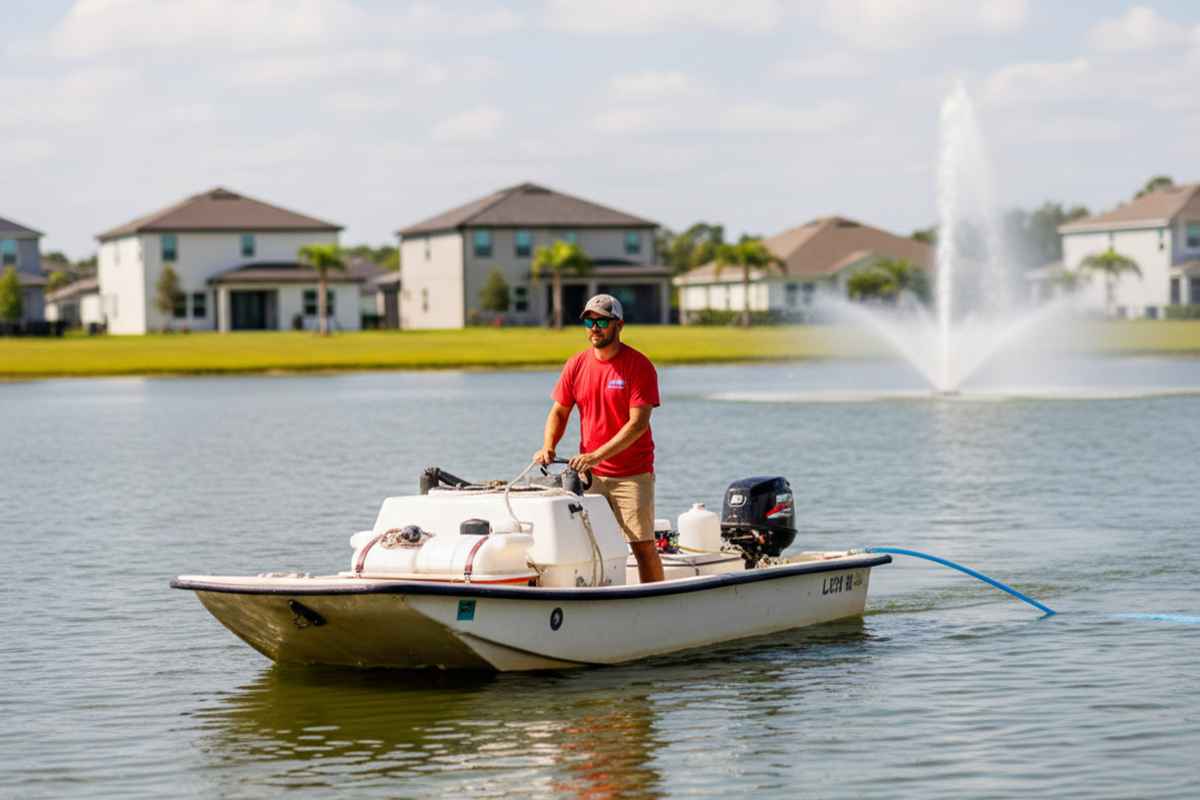
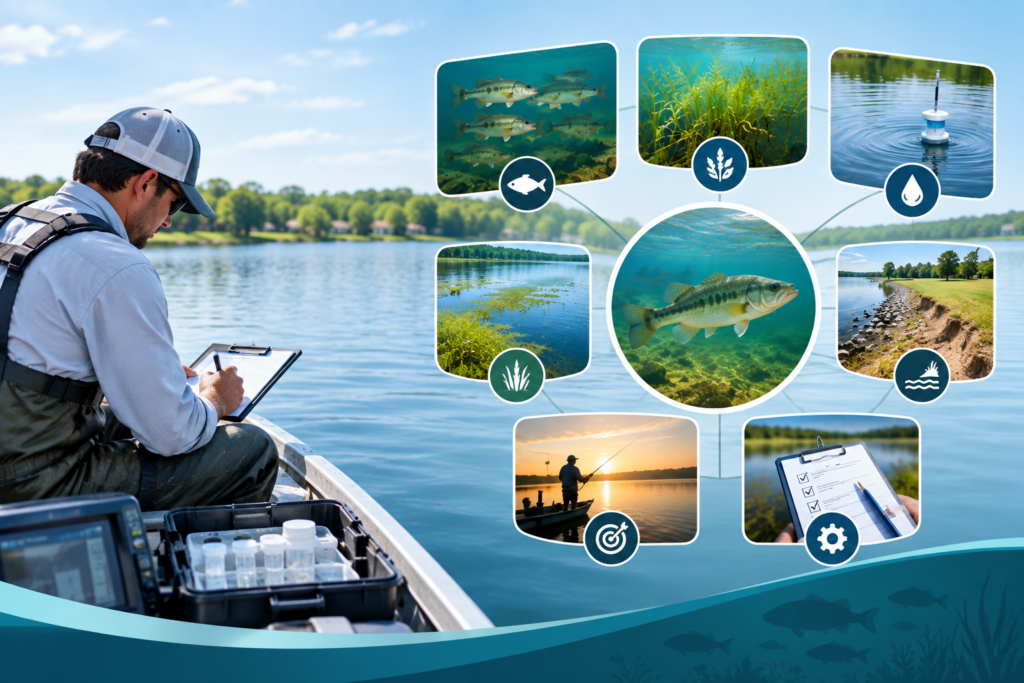
Professional Fish Stocking for Florida Waterbodies
- Existing fish populations
- Lake or pond size
- Available fish habitat
- Aquatic vegetation
- Water conditions
- Recreational fishing goals
- Previous stocking activities
- Overall management objectives
Why Fish Stocking Matters
A suitable fish population can contribute to the recreational value of a lake or pond and can be an important part of overall fishery management.
- Has a limited or unbalanced fish population
- Needs additional fish for recreational fishing
- Has experienced changes in its fish population
- Is being developed for recreational fishing
- Requires ongoing fishery management
- Has specific long-term fish population goals
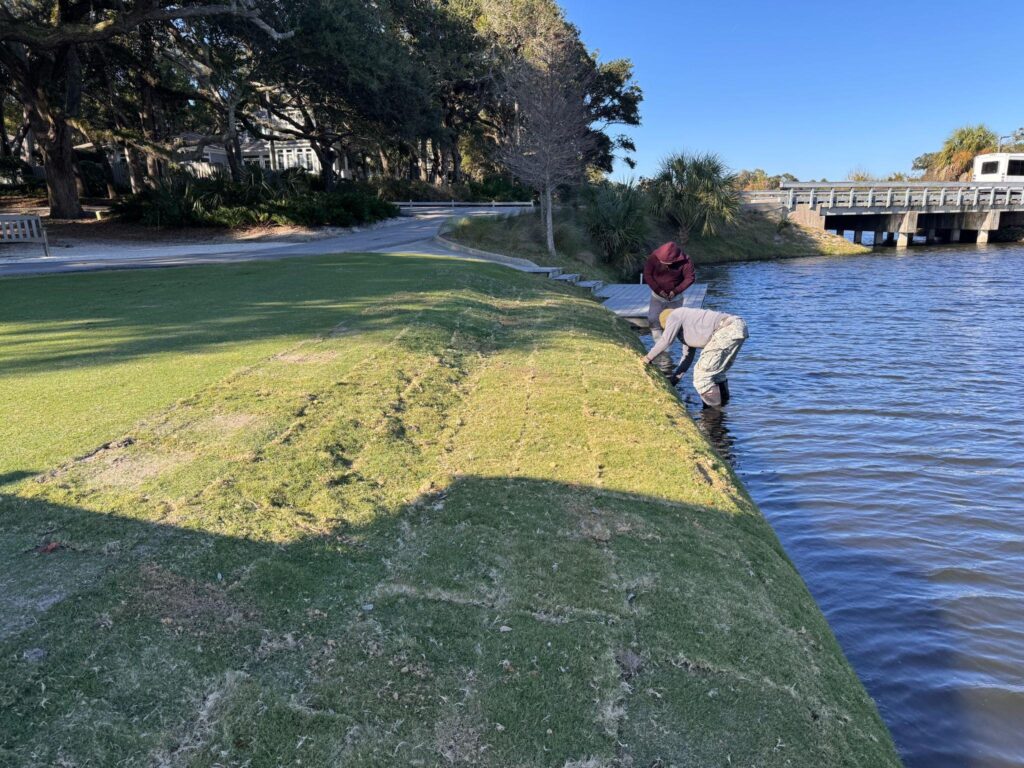
Fish Stocking Services in Florida for Lakes and Ponds
Sport Fish
Sport fish can support recreational fishing opportunities and may be considered when developing or maintaining a fishery for anglers.
Forage Fish
Forage fish can provide a food source for larger fish and may play an important role in supporting a balanced fish population.
Catfish
Catfish may be considered for lakes and ponds where recreational fishing is an important management objective.
Triploid Grass Carp
Triploid grass carp may be considered for managing certain aquatic vegetation problems where their use is appropriate and permitted. Their suitability should be evaluated based on the specific conditions and management requirements of the waterbody.
Evaluating Your Existing Fish Population
- Existing fish populations
- Aquatic vegetation
- Water quality
- Available fish habitat
- Lake or pond size
- Recreational fishing objectives
- Previous stocking activities
- Overall waterbody conditions
Fish Stocking and Overall Lake Management
Superior Waterway provides aquatic management services for different types of waterbodies throughout Florida. Understanding the relationship between fish populations and the overall condition of a waterbody can help property owners develop a more complete management approach.
Fish Stocking for Different Properties
Private Lakes and Ponds
Private property owners may consider fish stocking to support recreational fishing and maintain a suitable fish population within their lake or pond.
Commercial Properties
Commercial properties with managed lakes or ponds may require an organized approach to maintaining their aquatic environment and fish population.
Community and HOA Properties
Community lakes and HOA ponds can serve multiple purposes, including recreation and maintaining the appearance of the surrounding property. Fishery management can be considered as part of the broader care of these shared water resources
Recreational Fishing Properties
Properties where recreational fishing is a primary objective can benefit from a management approach that considers existing fish populations, available habitat, and long-term fishing goals.
Frequently Asked Questions
Fish stocking services in Florida involve introducing selected fish into a lake or pond as part of a planned fishery management strategy. The appropriate approach depends on the existing fish population, waterbody conditions, available habitat, and goals of the property.
Fish selection depends on the goals and conditions of the waterbody. Depending on the situation, sport fish, forage fish, catfish, or triploid grass carp may be considered.
Yes. It can help when a lake or pond has a limited or unbalanced fish population, especially as part of a fishery management plan.
No. Each waterbody is different, so fish population, habitat, water quality, and vegetation should be reviewed first.
Get the lake evaluated. It checks fish population, habitat, water conditions, and your fishing goals.
Yes. We provide fish stocking for Florida lakes and ponds. Contact us for a free estimate.
No matching FAQs found.