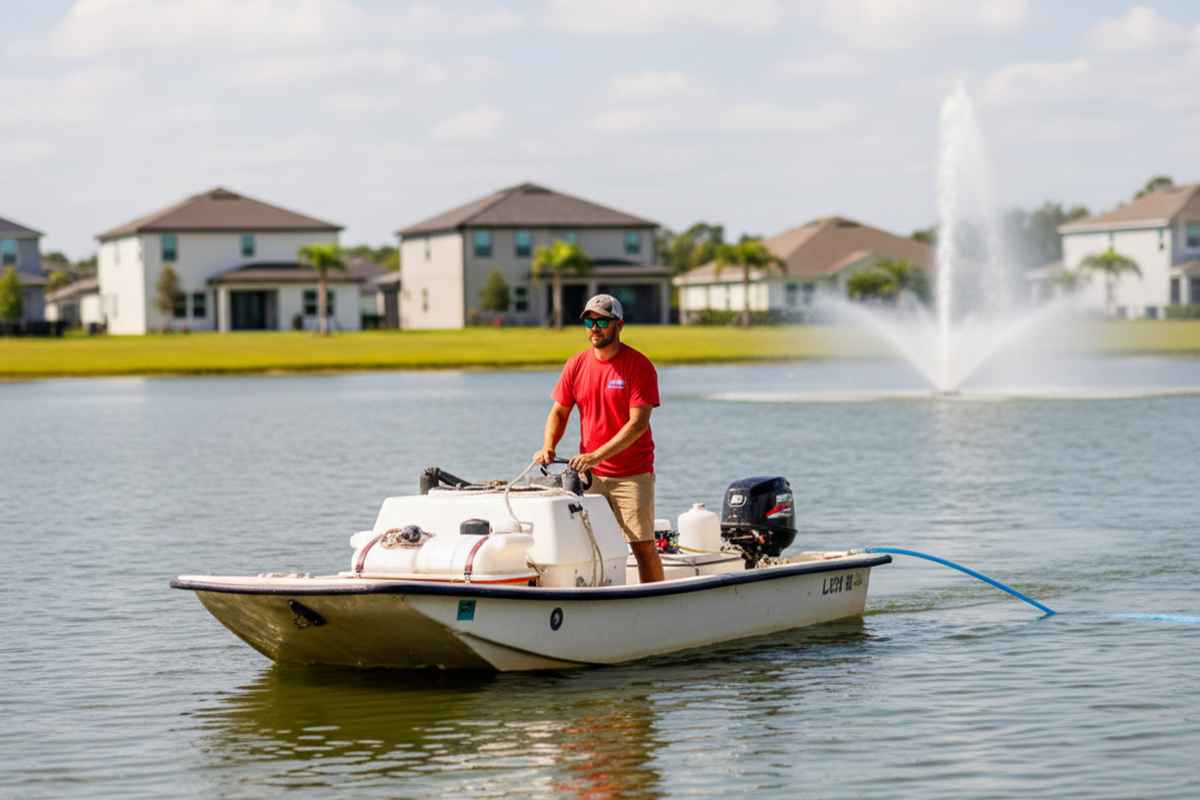

Wetland and Natural Area Management plays an important role in protecting healthy waterways, controlling unwanted vegetation, maintaining shorelines, and supporting the natural environment. For Florida properties, a well-planned management approach can help address changing water conditions and maintain the long-term health of wetlands and natural areas.
Wetland And Natural Area Management provides a practical way to protect these ecosystems while maintaining the appearance, functionality, and long-term health of surrounding waterways.
How Does Wetland Management Work?
Effective management usually starts with assessment rather than immediate intervention.
Step 1: Evaluate the Area
First, identify the current condition of the wetland or natural area.
Look for:
- Existing plant species
- Invasive vegetation
- Erosion
- Water-level changes
- Wildlife activity
Step 2: Establish Management Goals
The next step is determining what you want the area to achieve.
For example, the goal may be to:
- Improve water quality
- Restore native vegetation
- Control invasive plants
- Protect wildlife habitat
- Reduce erosion
Step 3: Address the Most Important Problems
Management should prioritize the issues that have the greatest impact.
For example, if wetland hydrology is functioning properly but invasive plants are spreading, invasive-species management may become a priority.
Step 4: Monitor the Results
Wetland management is not necessarily a one-time project.
Regular monitoring helps determine whether management actions are working and whether the strategy needs to be adjusted.
Tracking vegetation, water levels, erosion, and wildlife activity over time can provide valuable information about the area’s condition.
Why Wetland and Natural Area Management Matters in Local Conditions
Wetland environments vary significantly by location.
Weather patterns, rainfall, soil conditions, vegetation, drainage, development, and water chemistry can all influence how a site behaves.
This is particularly important in Florida, where stormwater, aquatic vegetation, shoreline conditions, and seasonal weather patterns can create unique water-management challenges.
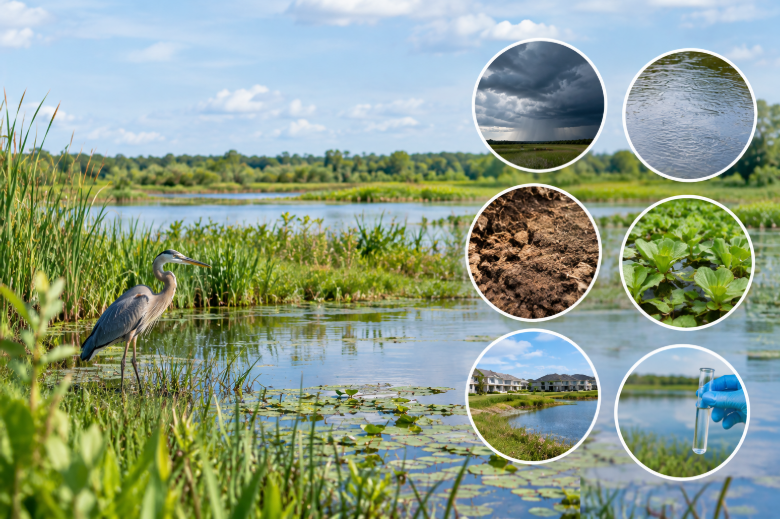
Wetland Management: Key Areas to Monitor
| Management Area | Common Issues | Why It Matters |
| Vegetation Management | Invasive plants, excessive growth, overgrown shoreline | Helps maintain a healthier and more balanced natural area |
| Water Quality | Poor clarity, algae growth, nutrient buildup | Supports healthier water conditions and improves overall appearance |
| Shoreline Management | Erosion, exposed soil, unstable edges | Helps protect the shoreline and surrounding property |
| Natural Area Maintenance | Debris, overgrowth, blocked access | Keeps the area clean, accessible, and easier to maintain |
| Wildlife Habitat | Loss of native vegetation, habitat disturbance | Supports a healthier environment for local wildlife |
Creating a Long-Term Management Plan
A successful natural-area management strategy should look beyond the immediate problem.
A long-term plan can include:
Assessment → Planning → Management → Monitoring → Adjustment
This approach makes it easier to identify changes before they become larger problems.
For example, regularly monitoring invasive plants may allow a property owner to address a small infestation before it spreads across a larger area.
Why Choose a Superior Waterway for Natural Area Management
Superior Waterway provides aquatic and water-management services designed to support healthier and more attractive water environments. Its services include wetland and natural-area management alongside aquatic vegetation control, shoreline services, water clarification, and other lake and pond management solutions.
Frequently Asked Questions
What is wetland and natural area management?
It is the ongoing process of monitoring, maintaining, and improving wetland ecosystems and surrounding natural areas while considering vegetation, water conditions, erosion, and environmental balance.
Why is wetland management important?
It can help control unwanted vegetation, protect natural plant communities, address erosion, and support healthy water and landscape conditions.
How often should a wetland be managed?
The right schedule depends on site conditions. Superior Waterway offers monthly, quarterly, semi-annual, and annual maintenance plans tailored to individual properties.
Can wetland management include erosion control?
Yes. Erosion can affect shorelines and surrounding natural areas, and Superior Waterway also provides shoreline erosion repair services.
Does wetland management mean removing all vegetation?
No. The objective is generally to manage vegetation appropriately, not eliminate the natural plant community. Different species and site conditions need to be considered when developing a management plan.