
Why Do Algae and Weeds Form?
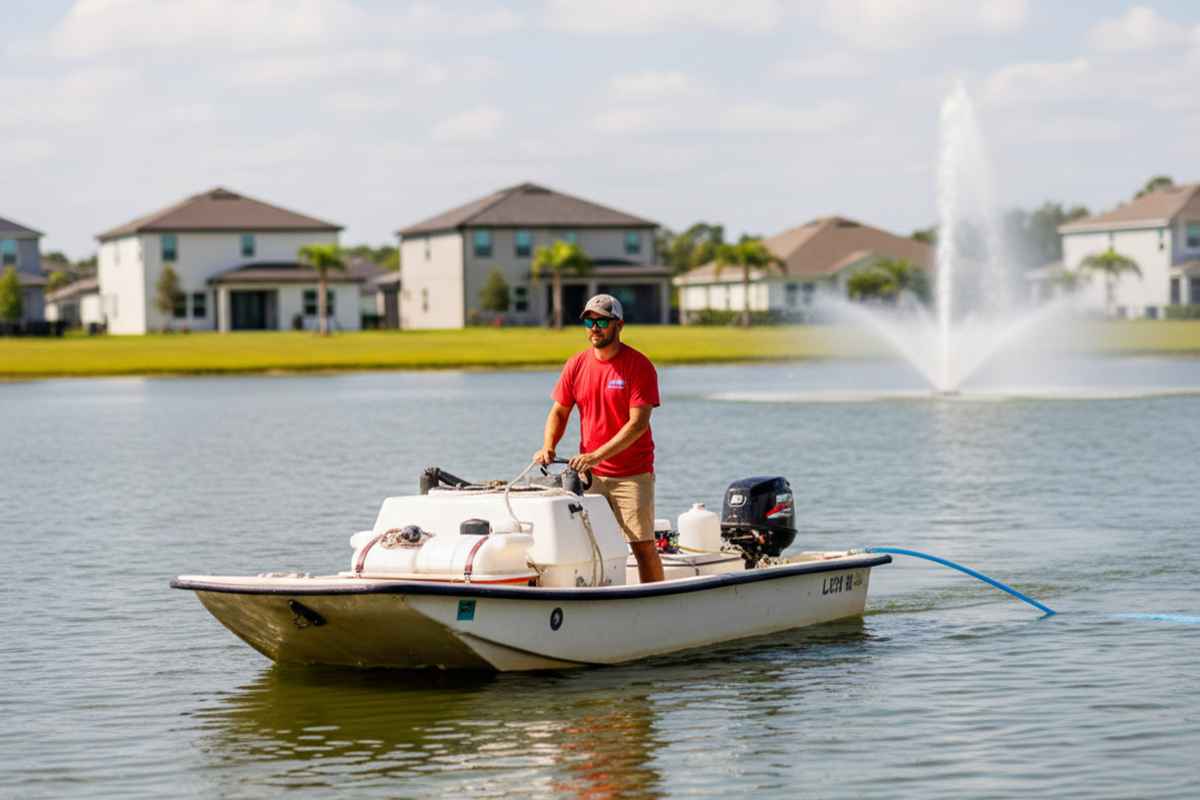
Florida’s warm weather makes algae and weed a year-round concern for lake and pond owners. Algae is natural in most waterbodies, but when its growth gets out of control, it can lower water quality, spoil the look of your lake, and make the water unpleasant to use.


How Do You Control Algae and Weeds in a Lake?
What Causes Algae and Weeds in Florida Lakes?
- Poor water clarity and appearance
- Unpleasant odors
- Low oxygen levels and stress on fish
- Overgrown shorelines
- Muck buildup on the bottom
Lakes and ponds left unattended for a long time are the most at risk. Unwanted aquatic plants can also spread from exotic plants and trees planted near the water. Unchecked growth can cause:

What Do Algae and Weeds Look Like?
- Green or brown slime: a thin layer of discoloration or a slimy coating on the water
- Floating mats: thick or tangled masses of algae on the surface
- Stringy clumps: strands or clusters that look like vegetation
- Dense plants: weeds growing along the shoreline or across the surface
- Foul odors: often a sign of noxious weed growth
Can Algae Be Harmful?
Steps to Revive the Balance of Algae in Your Lake
- Reduce excess nutrients: Use nutrient-binding agents to improve the quality of the lake.
- Add aeration: An aeration system adds dissolved oxygen at all levels of your lake or pond.
- Remove surface algae: Use equipment to remove algae mats that form on the water surface.


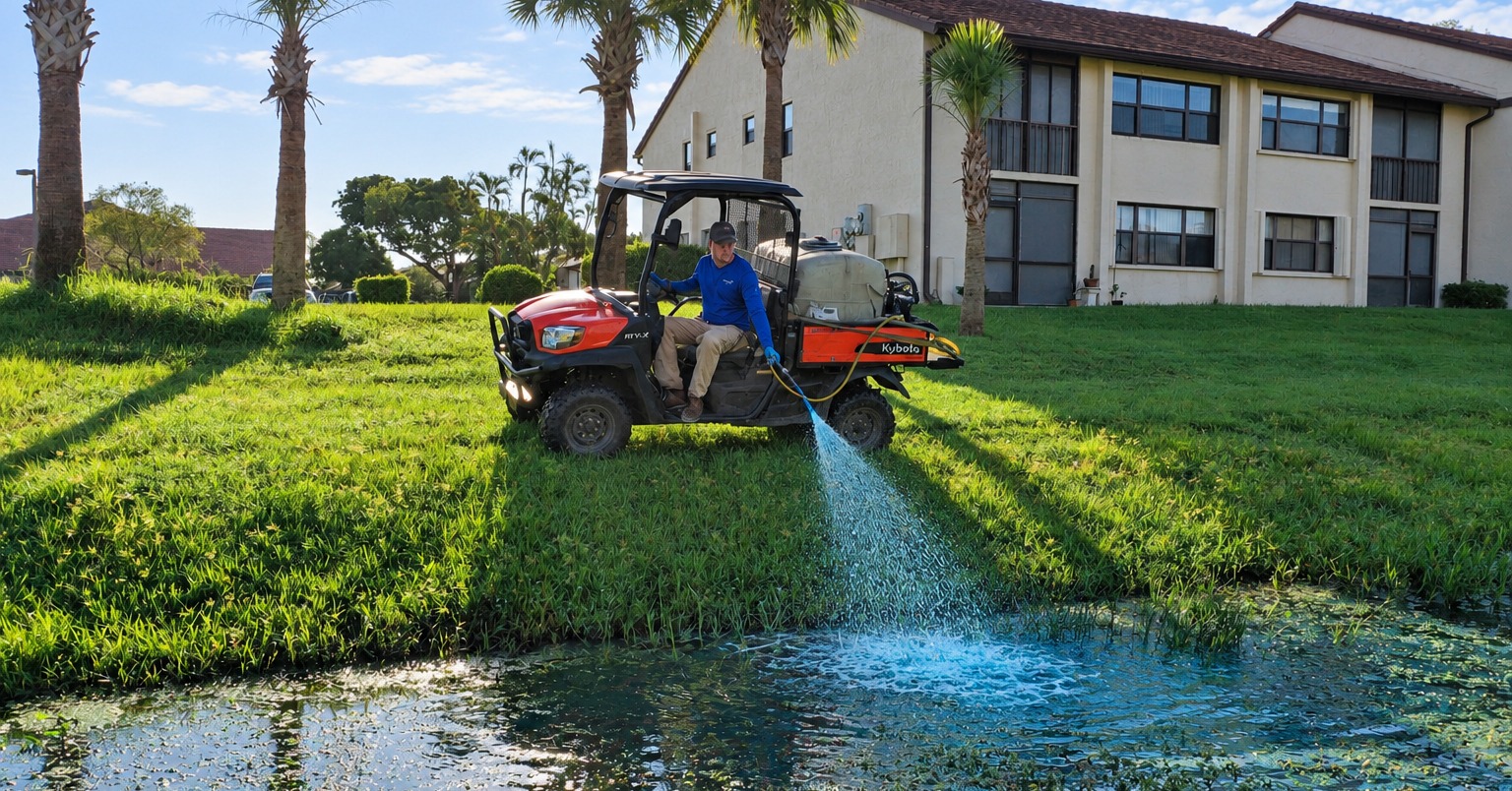
- Use approved treatments: Products should be EPA-registered and applied by a trained, state-certified aquatic technician or biologist.
- Combine methods: Using two or more methods often works best. It helps balance the aquatic ecosystem and supports life in the lake or pond.
Why Choose Superior Waterway Services for Algae and Weed Control in Florida?
- Custom plans for each lake or pond
- Trained, state-certified aquatic technicians
- EPA-registered products
- Service for HOAs, residential communities, commercial properties, golf courses, and private pond owners
- Free estimates
Some Frequently Asked Questions
You can send us a sample and we will identify the specific weed or you can directly call us to get an aquatic survey. Depending on what type of weed it is, we will be able to provide a suitable solution for you.
We follow certain precautions before application of the herbicides or algaecides such as measuring oxygen prior to treatments, running the water pH, determining temperature, and measuring the hardness of water before using any copper-based products. Furthermore, the products we use are EPA-approved and won’t cause any damage if used as directed by the product label.
While algae treatments start showing results in 3-10 days, aquatic weed herbicides like Reward, Aquathol Super K, or Nautique produce an effect within 1-2 weeks. Relatively slower agents like Sonar take 4-8 weeks to achieve results. These results will sometimes be effective for one year or longer.
As aquatic weeds are almost entirely made up of water, little residue remains after they decompose. In those rare cases which take longer, we have the provision of cutters to remove the dead weeds.
As aquatic weeds are almost entirely made up of water, little residue remains after they decompose. In those rare cases which take longer, we have the provision of cutters to remove the dead weeds.
A fountain or aerator does not necessarily prevent weed and algae growth. However, a surface aerator improves the look and provides biological effectiveness. Our team recommends a fountain to enhance aesthetics too. Get in touch with us to learn about our installation services.
The treatments are specifically to control weed and algae growth, they don’t make the water germ-free. Superior Waterway Services offers periodical testing of water for bacteria when you opt for our water management program.
No matching FAQs found.